
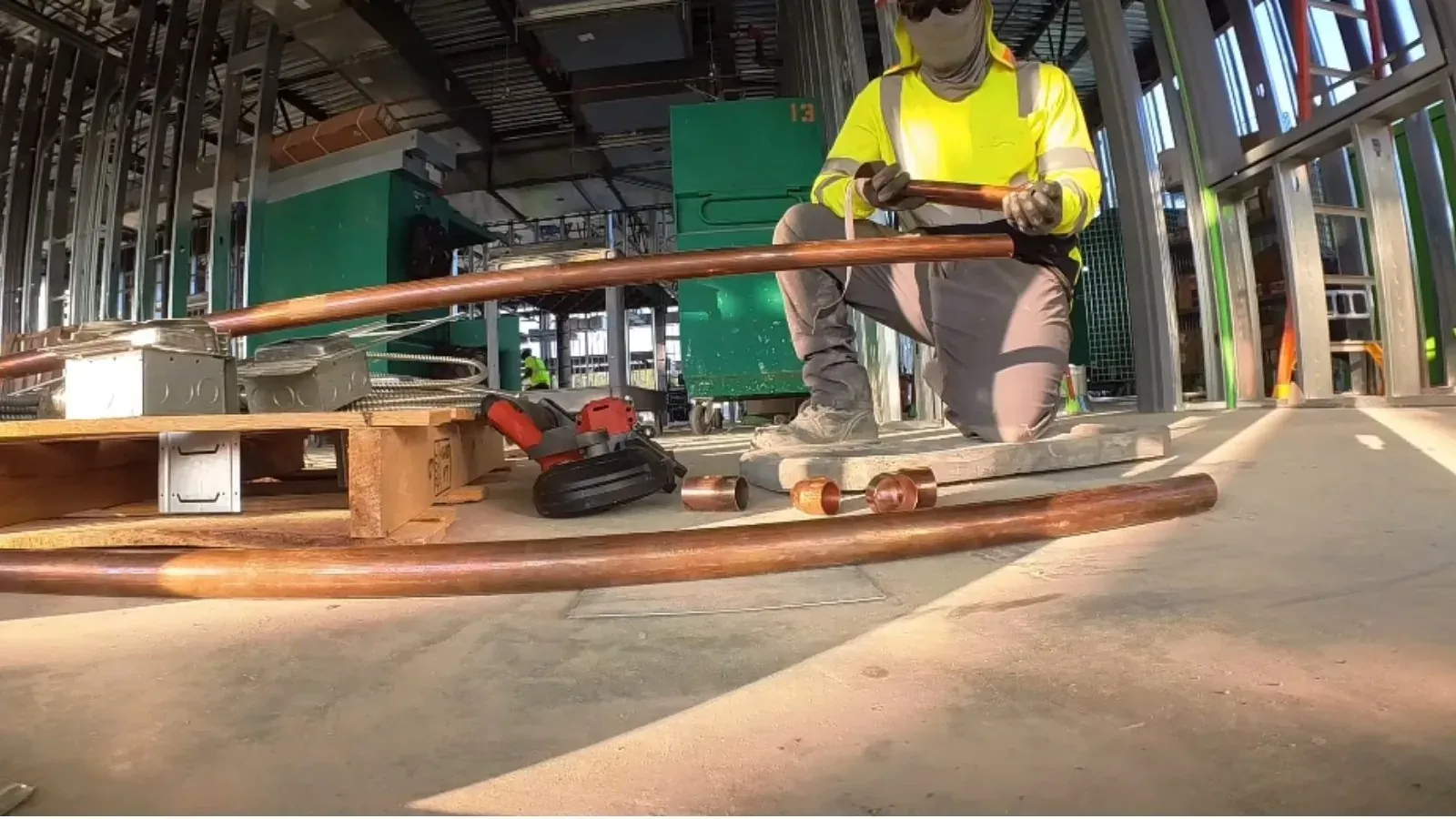
What counts as a plumbing installation
Installation covers everything from swapping a kitchen faucet to adding a basement bathroom. It includes sinks, toilets, tubs, showers, dishwashers, washing machine hookups, outdoor spigots and water-using appliances such as ice makers and water filters.
A good install gets the details right. The drain slopes correctly, the vent lets air in so traps hold water, and the supply lines have shutoffs. Those details decide whether the fixture works well and whether it passes inspection.
Common installation jobs
| Job | What is involved | Permit often needed |
|---|---|---|
| Replace a fixture | Swap faucet, toilet or sink using existing lines | Usually no |
| New bathroom | New drain, vent and supply lines | Yes |
| Laundry hookup | Supply valves, standpipe and drain | Sometimes |
| Appliance hookup | Dishwasher, ice maker, disposal | Usually no |
| Relocate a fixture | Move drain, vent and supply | Yes |
Permit rules depend on the scope. We check before work starts.
How we handle an installation
Scope the work
We walk the space, check existing lines and plan the layout.
Quote
You hear a clear price before work starts, with materials and labor described.
Install
We run lines, set fixtures and connect to drains, vents and supply.
Test and inspect
We pressure test, check drains and arrange an inspection where required.
Planning a project?
Call and we will book a visit that fits your schedule.
What installation costs and what changes it
You hear a clear price before work starts. A fixture swap and a new bathroom are very different jobs.
The factors:
Planned installs are not an insurance matter. If your remodel follows storm or water damage, your claim may include plumbing.
Permits and code in Massillon
Plumbing work in Ohio follows the Ohio Plumbing Code, OAC Chapter 4101:3. In Massillon the Building Department at One James Duncan Plaza registers plumbing contractors annually and has a plumbing and heating inspector. Ask whether your project needs a permit, because unpermitted work can cause problems when you sell.
In the county, the Stark County Health Department runs a plumbing program that requires permits before work starts, and it lists registered plumbers. Which office handles your address depends on where you live, so ask the Massillon Building Department when you plan a project.
Planning a remodel around the plumbing
The best time to talk to a plumber is before the drywall comes down. Moving a sink, a toilet or a shower means moving drains and vents, and that depends on the joists, the slab and the location of the main stack. A fixture that looks like a simple shift on a drawing can cost much more than expected once the floor is open.
Bring your plan, a few photos and a list of the fixtures you want. We walk the space, mark the drain and supply routes and flag anything that needs a permit. Rough-in happens before walls are closed, and a final inspection happens after the fixtures are set.
Choosing fixtures that work with your plumbing
Fixtures are not interchangeable. A toilet's rough-in distance has to match the flange, a vanity must clear the drain and supply stops, and a shower valve must suit the pressure and the wall depth. Buying a fixture before the plumber confirms the rough-in can mean returns and delays.
If water in your area leaves scale, ask about finishes that resist spotting and about a water treatment system. We can also install customer-supplied fixtures, and we tell you if anything about them needs a change.
Fixture, drain and vent installation follows the Ohio Plumbing Code, OAC Chapter 4101:3, and its standards are what an inspector checks.
Before we arrive
- Locate the main water shutoff and make sure it turns
- Clear the work area and cover floors you want to protect
- Move stored items away from the walls where lines will run
- Tell us about any known leaks, past repairs or old materials
- Keep children and pets out of the work area
- Have fixtures on site, and the model numbers handy, if you bought them
Plumbing installation questions
Replacing a fixture in the same spot often does not. Adding or moving lines usually does. We confirm before work starts.
Yes. We install customer-supplied fixtures and tell you if the setup needs changes.
Often yes, but drain depth and sewer location decide the method. We assess the site first.
We arrange the inspection where a permit applies.
You hear a clear price before work starts. The scope, fixtures, existing lines, access and permits all matter.